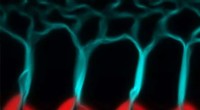
* A selectively permeable membrane: This is the key structure that allows osmosis to occur. The membrane is selectively permeable, meaning it allows some substances to pass through while blocking others. In the case of osmosis, the membrane allows water molecules to pass through but restricts the movement of other molecules, like solutes. This difference in permeability creates the driving force for osmosis.
* A concentration gradient: This refers to the difference in solute concentration between two solutions separated by a semipermeable membrane. Water will always move from an area of high water concentration (low solute concentration) to an area of low water concentration (high solute concentration) in order to equalize the concentration of water on both sides of the membrane.
While not strictly necessary, these structures can also be involved:
* Aquaporins: These are specialized protein channels embedded in the cell membrane that facilitate the movement of water molecules across the membrane. Aquaporins can significantly increase the rate of osmosis.
It's important to note that osmosis is a passive process, meaning it doesn't require the cell to expend energy. The movement of water is driven solely by the concentration gradient and the selective permeability of the membrane.