Here's why:
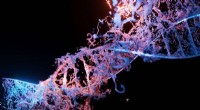
* Mutations are changes in the DNA sequence. These changes can be small, like a single base pair substitution, or large, like a whole chromosome duplication.
* Mutations are random. They can occur spontaneously during DNA replication or be caused by environmental factors like radiation or certain chemicals.
* Mutations introduce new alleles (versions of a gene) into the population. These new alleles can provide a new trait, modify an existing trait, or have no noticeable effect.
* Natural selection acts on these variations. If a new allele provides an advantage, it's more likely to be passed on to the next generation, increasing its frequency in the population. This leads to the evolution of the species.
Other factors contributing to variation within species:
* Recombination: During sexual reproduction, chromosomes from the parents are shuffled and combined in new ways. This creates a wide array of possible combinations of genes, increasing variation.
* Gene flow: The movement of individuals between populations can introduce new alleles into a population, increasing its diversity.
* Environmental factors: The environment can influence the expression of genes, leading to phenotypic differences even with the same genotype.
In summary, genetic mutation is the primary source of new variations, while other factors like recombination, gene flow, and environmental influence contribute to the diversity within a species.