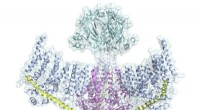
1. Ribosome: Protein synthesis begins at the ribosome, where the genetic code from messenger RNA (mRNA) is translated into a chain of amino acids.
2. Endoplasmic Reticulum (ER):
* Rough ER: If the protein is destined for secretion or for placement in other organelles, it will enter the rough ER (studded with ribosomes). Here, it may undergo folding, modification, and quality control checks.
* Smooth ER: If the protein is involved in lipid metabolism or detoxification, it may be processed in the smooth ER.
3. Golgi Apparatus: The protein travels from the ER to the Golgi apparatus, a series of stacked membranes. Here, it undergoes further processing, sorting, and packaging. This may include:
* Glycosylation: Adding sugars to the protein.
* Phosphorylation: Adding phosphate groups.
* Proteolytic Cleavage: Cutting the protein into smaller units.
4. Transport Vesicles: The Golgi packages the protein into small, membrane-bound sacs called transport vesicles. These vesicles bud off from the Golgi and transport the protein to its final destination.
5. Destination: The protein can then be:
* Secreted outside the cell: The vesicle fuses with the cell membrane, releasing the protein to the exterior.
* Delivered to another organelle: The vesicle fuses with the membrane of the target organelle, such as the lysosome or the nucleus.
* Remain in the cell membrane: The protein becomes part of the cell membrane.
Important Note: This is a general outline, and the specific steps and details can vary depending on the type of protein and its function.