How the ECM regulates cell behavior:
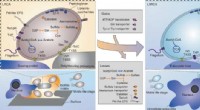
1. Mechanical Cues: The ECM provides structural support and a scaffold for cells. Its stiffness, elasticity, and organization can directly influence cell shape, migration, and differentiation. This mechanical signaling is perceived by integrins, transmembrane receptors that connect the ECM to the cytoskeleton within the cell.
2. Biochemical Signaling: The ECM contains a rich variety of proteins and molecules that bind to cell surface receptors. These interactions can activate intracellular signaling pathways, leading to changes in gene expression, protein production, and ultimately, cell behavior. Some examples include:
* Growth factors: Bound to ECM components, these factors regulate cell growth, survival, and proliferation.
* Adhesion molecules: These proteins like laminin and fibronectin promote cell attachment and influence cell migration.
* Proteoglycans: These molecules regulate water content and can bind growth factors, influencing their activity.
3. Dynamic Remodeling: The ECM isn't static. It can be continuously remodeled by enzymes like matrix metalloproteinases (MMPs), which break down ECM components, and by cells themselves, which deposit new ECM material. This dynamic remodeling influences cell behavior by:
* Providing pathways for cell migration: Breaking down ECM barriers allows cells to move through tissues.
* Creating microenvironments: Different ECM composition and organization can create specific niches that support different cell types.
* Influencing cell differentiation: Changes in ECM composition can trigger cells to switch their fate.
It's important to note that:
* The ECM doesn't act as a "single communication channel" but rather as a complex and dynamic system.
* Different cell types respond to the ECM differently, based on their receptor expression and signaling pathways.
* The ECM's influence on cell behavior is not always immediate. Changes in the ECM can trigger long-term effects on cell development and function.
In conclusion, the ECM's regulation of animal cell behavior is multifaceted and involves a complex interplay of mechanical and biochemical cues, dynamic remodeling, and intricate interactions with cell surface receptors.