Here's how it works:
* Nucleotides are the building blocks of nucleic acids (DNA and RNA).
* Each nucleotide consists of a sugar (deoxyribose in DNA, ribose in RNA), a phosphate group, and a nitrogenous base.
* The phosphate group of one nucleotide forms a covalent bond with the sugar of the next nucleotide. This bond is called a phosphodiester linkage.
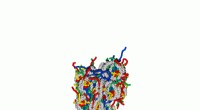
* This linkage creates a repeating sugar-phosphate backbone along the nucleic acid chain.
The nitrogenous bases (adenine, guanine, cytosine, thymine in DNA; adenine, guanine, cytosine, uracil in RNA) project from the backbone and participate in base pairing within the molecule.