1. Posture and Locomotion:
* Humans: Bipedal (walk upright on two legs). This results in a S-shaped spine with curves to distribute weight and maintain balance. Pelvis is wider and bowl-shaped for support. Legs are longer and stronger for walking.
* Monkeys: Quadrupedal (walk on all fours). Their spine is more straight and less curved. Their pelvis is narrower and longer. Their arms are longer and stronger for swinging and climbing.
2. Skull and Jaw:
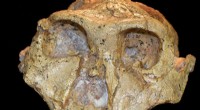
* Humans: Larger cranial capacity (for brain). Smaller snout and jaws. Teeth adapted for omnivorous diet.
* Monkeys: Smaller cranial capacity. Protruding snout and powerful jaws. Teeth adapted for fruit and leaf diet (in most species).
3. Hands and Feet:
* Humans: Opposable thumbs for fine motor skills. Feet with a rigid arch for walking and running.
* Monkeys: Opposable thumbs and toes for grasping and climbing. Feet are prehensile (grasping) and can be used for climbing and walking.
4. Limb Length and Structure:
* Humans: Arms shorter than legs, adapted for walking and running.
* Monkeys: Arms longer than legs, adapted for swinging and climbing.
* Other: Monkeys have clavicle bones (collarbones) that are longer and more prominent than in humans, allowing for greater range of motion in the shoulder.
5. Tail:
* Humans: Tailless.
* Monkeys: Most have a tail (except apes), which can be prehensile (used for grasping) or non-prehensile. The tail provides balance and aids in swinging.
Key Points:
* These differences reflect the different ways of life and adaptations for specific environments.
* Human skeletons are designed for bipedal locomotion and the use of tools.
* Monkey skeletons are designed for quadrupedal locomotion and arboreal (tree-dwelling) life.
Further Note: There is significant variation within primate groups, so these are general differences.