Here are some factors that can *speed up* the rate of evolution:
* Strong selection pressures: When environmental conditions change drastically, or a new predator or disease arises, organisms that are best suited to survive and reproduce will pass on their genes more successfully, leading to rapid changes in the population.
* Small population size: In small populations, genetic drift (random changes in gene frequencies) can have a larger impact, leading to faster evolutionary change.
* High mutation rate: Mutations introduce new variations into a population. A higher mutation rate means more variations are available for natural selection to act upon.
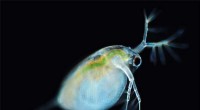
* Short generation times: Organisms with short generation times (like bacteria) can evolve much faster than those with long generation times (like elephants).
It's important to remember that "fast" is relative. Even with these factors, evolution still takes place over many generations, and it's never a straightforward process.
Let me know if you'd like to explore any of these factors in more detail!