* Obtaining nutrients: It needs to find and acquire food sources, either through photosynthesis or consuming other organisms.
* Producing energy: It must be able to break down nutrients to generate energy for its activities.
* Waste removal: It needs to eliminate waste products from its metabolism.
* Reproduction: It must be able to copy its genetic material and create new individuals.
* Responding to stimuli: It must be able to sense changes in its environment and react accordingly to maintain homeostasis (internal stability).
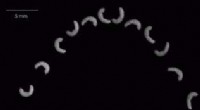
* Movement: It may need to move around to find food, escape predators, or reach optimal living conditions.
Since a unicellular organism lacks specialized cells, each cell must be capable of carrying out all these functions. This requires a high degree of versatility and adaptability, allowing the organism to cope with a wide range of environmental challenges and thrive in diverse habitats.
Here are some examples of how versatility manifests in unicellular organisms:
* Amoeba: This organism uses its flexible cell membrane to change shape and move, engulfing food through phagocytosis.
* Paramecium: This organism has specialized structures like cilia for movement and contractile vacuoles for regulating water balance.
* Bacteria: These organisms have diverse metabolic pathways, enabling them to survive in extreme environments like hot springs or deep-sea vents.
In conclusion, a unicellular organism's versatility is essential for its survival. Its single cell must be able to perform multiple functions simultaneously, allowing it to adapt to changing conditions and thrive in a wide range of environments.