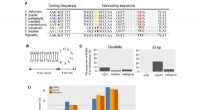
Here's a breakdown of what genetic markers are and why they're important:
What they are:
* Specific DNA sequences: These sequences can be single base pair changes (SNPs), short tandem repeats (STRs), or even larger DNA variations.
* Known locations: They are mapped to specific locations on chromosomes, allowing researchers to pinpoint their position within the genome.
Why they're important:
* Gene mapping: They help researchers map genes and identify the locations of disease-causing genes.
* Genetic linkage analysis: By tracking the inheritance of markers along with traits, scientists can determine if genes are linked to specific diseases or conditions.
* Forensic science: DNA markers are crucial in forensic investigations, providing evidence in criminal cases.
* Paternity testing: Markers help establish biological relationships between individuals.
* Disease prediction: Some markers are associated with increased risk for certain diseases, providing insights into individual predisposition.
* Personalized medicine: Genetic markers can guide medical treatments based on individual genetic makeup.
* Evolutionary studies: They are useful in studying evolutionary relationships between species.
Types of genetic markers:
* Single Nucleotide Polymorphisms (SNPs): These are the most common type of genetic marker, involving a single base pair difference in DNA sequence.
* Short Tandem Repeats (STRs): Also known as microsatellites, these markers are short repetitive DNA sequences that vary in the number of repeats.
* Copy Number Variations (CNVs): These are variations in the number of copies of specific DNA segments.
* Microsatellites: These are highly variable short sequences of DNA that are used in forensic science and paternity testing.
* RFLPs (Restriction Fragment Length Polymorphisms): These are variations in the length of DNA fragments produced by restriction enzymes.
In summary, genetic markers are powerful tools for understanding the human genome, tracing inheritance patterns, and advancing our understanding of health, disease, and evolution.