Here's the breakdown:
* Living organisms are defined by certain characteristics like:
* Organization: They are made of cells and have a complex internal structure.
* Metabolism: They use energy and materials to grow and maintain themselves.
* Growth and development: They increase in size and complexity.
* Adaptation: They change over time to survive in their environment.
* Reproduction: They create offspring.
* Response to stimuli: They react to changes in their environment.
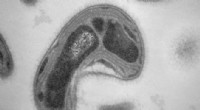
* Bacteria are single-celled organisms that fall under the category of prokaryotes. Prokaryotes are one of the two main types of living things, the other being eukaryotes (like animals, plants, fungi, and protists).
Key Differences Between Bacteria and Other Living Organisms:
* Structure: Bacteria are simpler than other living organisms. They lack a nucleus and other membrane-bound organelles found in eukaryotes.
* Reproduction: Bacteria reproduce asexually, usually through binary fission.
* Diversity: While bacteria are a diverse group, they are still relatively simple compared to the vast complexity of other living organisms like plants and animals.
In summary: Bacteria are living organisms, but they are a specific type of organism called prokaryotes. They share the characteristics of all living things, but they are structurally and functionally simpler than other types of living organisms.