* Magnification: TEMs provide much higher magnification than light microscopes, allowing you to see the fine details of cell organelles and structures.
* Resolution: TEMs have much better resolution than light microscopes, enabling you to distinguish between very small and closely spaced objects within the cell.
* Thin sections: TEMs work by passing electrons through a very thin slice of the sample. This thinness allows the electrons to pass through and create an image.
* Contrast: TEMs use heavy metals to stain the sample, providing contrast and making it easier to see the different structures within the cell.
Light microscopes, while useful for observing whole cells, are limited in their ability to resolve the internal structures of a cell due to the wavelength of visible light.
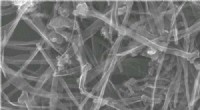
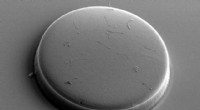
Other types of microscopes like scanning electron microscopes (SEMs) are excellent for studying the surface of cells and other objects, but they don't provide the same level of detail for internal structures as TEMs.