Here's a breakdown of the key aspects:
* Interbreed: Organisms within a species can successfully mate with each other.
* Fertile offspring: The offspring produced from these matings are also capable of reproducing themselves.
This definition is based on the idea that gene flow between populations is crucial for maintaining a single species. If two populations are reproductively isolated, they will diverge genetically over time and eventually become distinct species.
However, the biological species concept has some limitations:
* Difficult to apply to extinct species: It's impossible to observe breeding patterns in extinct species.
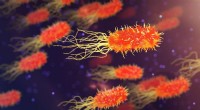
* Not applicable to asexually reproducing organisms: Asexual organisms reproduce without mating, making it difficult to define species based on interbreeding.
* Difficult to apply to species with complex mating systems: Some species have very complex mating behaviors or can hybridize with other species, making it difficult to determine reproductive isolation.
Despite its limitations, the biological species concept is the most widely used and generally accepted definition of a species. It provides a useful framework for understanding the diversity of life on Earth and the processes that drive evolution.