* Science focuses on observation and explanation: Science aims to understand how things work and why they happen. It's not about assigning purpose in the way we might think about human intentions.
* Purpose is a human concept: We often attribute purpose to things, but this is based on our own understanding and interpretation. For example, we might say the "purpose" of a heart is to pump blood, but that's a function we've assigned to it based on our knowledge of its role in the body.
* Evolutionary processes: In biology, the concept of "purpose" is often replaced by the idea of adaptation. Species evolve through natural selection, and traits that provide a survival or reproductive advantage are more likely to be passed on. So, a heart's "purpose" might be understood as a product of its evolutionary history, where a pumping organ was beneficial for survival.
Examples:
* The purpose of a river: Scientifically, we'd talk about the river's formation (erosion, water flow), its role in the ecosystem (habitat, nutrient transport), and its impact on the landscape (creating valleys, transporting sediment). We wouldn't talk about its "purpose" in a human sense.
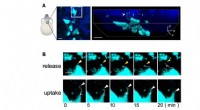
* The purpose of a neuron: We could discuss the neuron's structure, its role in transmitting signals, and how it interacts with other neurons. We wouldn't say it has a "purpose" like "to think" or "to feel."
In summary: While we might use "purpose" in everyday language, it's not a scientific term. Science focuses on understanding the mechanisms and processes that underlie natural phenomena, rather than assigning human-like purposes to them.