Here's the breakdown:
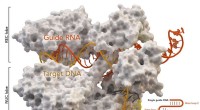
* DNA: Your genetic instructions are stored in DNA, a molecule made up of four nucleotide bases: adenine (A), guanine (G), cytosine (C), and thymine (T). These bases are arranged in specific sequences, forming genes.
* RNA: The DNA code is copied into messenger RNA (mRNA) through a process called transcription. mRNA is similar to DNA, but uses uracil (U) instead of thymine (T).
* Codons: mRNA is read in groups of three nucleotides called codons. Each codon specifies a particular amino acid.
* Amino Acids: There are 20 different amino acids that make up proteins.
* Ribosomes: Ribosomes are cellular machines that read the mRNA codons and translate them into amino acids. They then link these amino acids together to create proteins.
Key Points:
* Universality: The genetic code is nearly universal, meaning that the same codons specify the same amino acids in most organisms.
* Redundancy: There are multiple codons that can code for the same amino acid.
* Start and Stop Codons: There are special codons that signal the start and end of protein synthesis.
Example:
* The codon AUG codes for the amino acid methionine (Met) and is also the start codon.
* The codon UAA is a stop codon, meaning it signals the end of protein synthesis.
Translation Table:
A translation table is a chart that shows which codons correspond to which amino acids. You can find a detailed translation table online.
In summary, the genetic code is the blueprint for protein synthesis, and it is used to translate the nucleotide sequence of a gene into the amino acid sequence of a protein.