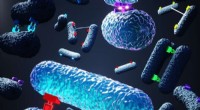
The fundamental difference between one-celled organisms (unicellular) and multi-cellular organisms lies in their level of complexity and organization.
One-celled Organisms (Unicellular):
* Single cell: These organisms consist of only one cell, which carries out all the life functions necessary for survival.
* Simple structure: They lack specialized tissues, organs, or organ systems.
* Independent: Each cell is a complete, self-sufficient organism.
* Examples: Bacteria, archaea, protozoa, algae, and yeast.
Multi-cellular Organisms:
* Multiple cells: These organisms are composed of many cells that work together in a coordinated fashion.
* Specialized cells: Different cells develop specific structures and functions, forming tissues, organs, and organ systems.
* Interdependence: Cells rely on each other for survival and function.
* Examples: Plants, animals, fungi.
Here's a table summarizing the key differences:
| Feature | One-celled Organisms | Multi-cellular Organisms |
|---|---|---|
| Number of cells | 1 | Many |
| Structure | Simple, single cell | Complex, with specialized cells, tissues, organs, and organ systems |
| Life functions | Performed by single cell | Performed by specialized cells working together |
| Dependence | Independent | Interdependent |
| Examples | Bacteria, archaea, protozoa, algae, yeast | Plants, animals, fungi |
Furthermore, there are other crucial differences:
* Size: One-celled organisms are typically microscopic, while multi-cellular organisms can range in size from small to enormous.
* Reproduction: One-celled organisms reproduce primarily through asexual methods like binary fission. Multi-cellular organisms typically reproduce sexually, although some can reproduce asexually as well.
* Adaptation: One-celled organisms can adapt quickly to changing environments due to their simple structure. Multi-cellular organisms may require longer periods of adaptation.
In summary, the fundamental difference between one-celled and multi-cellular organisms lies in the organization and complexity of their cellular structure, which ultimately defines their capabilities and the way they interact with their environment.