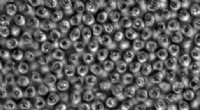
Diffusion and osmosis are crucial passive transport mechanisms that allow cells to maintain their internal environment and interact with their surroundings.
1. Diffusion:
* Definition: The movement of molecules from an area of higher concentration to an area of lower concentration. This movement is driven by the inherent kinetic energy of molecules, causing them to spread out randomly.
* Impact on cells: Diffusion allows cells to:
* Obtain nutrients: Cells take up essential nutrients like glucose, oxygen, and amino acids from their surroundings through diffusion.
* Eliminate waste: Waste products like carbon dioxide and ammonia are released from cells through diffusion.
* Maintain proper cellular function: Diffusion ensures the distribution of molecules within the cell, facilitating important chemical reactions and processes.
2. Osmosis:
* Definition: The movement of water across a semipermeable membrane from an area of higher water concentration (lower solute concentration) to an area of lower water concentration (higher solute concentration). This is driven by the need to equalize the solute concentration on both sides of the membrane.
* Impact on cells: Osmosis is crucial for:
* Maintaining cell volume: Water movement through osmosis helps regulate the cell's internal water content, preventing swelling or shrinking.
* Transporting substances: Osmosis can facilitate the transport of dissolved substances across the cell membrane.
* Cell signaling: Osmotic pressure changes can act as signaling mechanisms, influencing cell processes.
Examples:
* Oxygen diffusion: Oxygen diffuses from the lungs into the blood and then into cells, where it's used for respiration.
* Waste removal: Carbon dioxide diffuses from cells into the blood, where it's transported to the lungs for exhalation.
* Water movement: Water moves into cells by osmosis to maintain their proper hydration.
* Nutrient uptake: Glucose diffuses from the small intestine into the bloodstream and then into cells, providing energy.
Consequences of disrupted diffusion or osmosis:
* Cell dehydration: If cells lose too much water due to osmosis, they can shrink and die.
* Cell swelling: If cells take up too much water due to osmosis, they can swell and burst.
* Nutrient deficiencies: Inadequate diffusion of nutrients can lead to cell malfunction and death.
* Waste accumulation: If waste products cannot be removed by diffusion, they can build up within cells and lead to toxicity.
Conclusion:
Diffusion and osmosis are essential for cell survival and function. These processes enable cells to maintain their internal environment, acquire nutrients, remove waste, and interact with their surroundings. Any disruption to these processes can have detrimental consequences for cells and ultimately, the entire organism.