Here's why:
* Hydroxyl group: Ribose sugar has a hydroxyl group (-OH) attached to the 2' carbon, while deoxyribose lacks this hydroxyl group. This hydroxyl group in RNA makes it more susceptible to hydrolysis, a chemical reaction that breaks down molecules by adding water.
* Chemical Reactivity: The 2' hydroxyl group in RNA makes it more chemically reactive. It can participate in reactions that break down the phosphodiester bonds within the RNA backbone, leading to hydrolysis.
* Stability: The absence of the 2' hydroxyl group in DNA makes its backbone more stable and less prone to hydrolysis. This stability is crucial for the long-term storage of genetic information within cells.
Other factors contributing to DNA's stability:
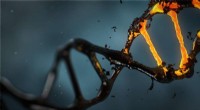
* Double-stranded structure: DNA's double-stranded structure provides additional protection against hydrolysis. The two strands are held together by hydrogen bonds, which further stabilize the molecule.
* Base pairing: The complementary base pairing in DNA further contributes to its stability.
* Protective proteins: DNA is often associated with proteins that protect it from degradation.
In summary, the absence of the 2' hydroxyl group in deoxyribose sugar is the key factor responsible for DNA's greater resistance to hydrolysis compared to RNA. This difference in stability is crucial for the functions of both molecules: DNA as the long-term storage of genetic information, and RNA as a more transient messenger molecule.