Here's why:
* Evolution is about changes in allele frequencies within a population. Evolution doesn't happen to individual organisms. An individual might have a beneficial mutation, but it's the spread of that mutation through reproduction that leads to evolution.
* Individuals don't change their genes. The genes an individual inherits are set for their lifetime. Evolution involves changes in the genetic makeup of a population over generations.
* A single organism cannot evolve. If you have a single organism isolated from others, it can't evolve. There's no gene pool to change, and no potential for mutations to spread.
Let's break it down with an example:
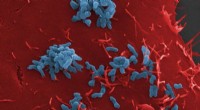
Imagine a population of bacteria. Some bacteria might have a mutation that makes them resistant to antibiotics. If that mutation is beneficial, the resistant bacteria will reproduce more successfully, passing the mutation on to their offspring. Over time, the frequency of the antibiotic-resistance gene will increase in the population, leading to the evolution of the bacterial population.
Important Note: While populations are the smallest unit that can evolve, natural selection acts on individuals. Individuals with traits that are better suited to their environment are more likely to survive and reproduce, passing on those traits to their offspring. This is how evolution happens.