Here's why:
* Protein Synthesis: Ribosomes, located on the rough ER, are the sites of protein synthesis.
* Folding and Modification: The ER provides an environment for newly synthesized proteins to fold into their correct three-dimensional shape. It also modifies proteins by adding carbohydrates or lipids.
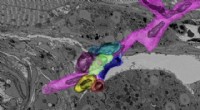
* Transport: The ER forms a network of interconnected membranes that allows for the transport of proteins throughout the cell.
* Vesicle Formation: Proteins are packaged into small sacs called vesicles, which bud off from the ER and carry the proteins to other destinations, such as the Golgi apparatus.
Other structures that play a role in protein transport:
* Golgi apparatus: Processes and packages proteins for secretion or delivery to other organelles.
* Cytoskeleton: Provides tracks for the movement of vesicles containing proteins.
* Motor proteins: Move vesicles along the cytoskeleton.
So, while the ER is the primary structure involved in protein transport, it doesn't act alone. It works together with other organelles and cellular components to ensure efficient protein delivery.