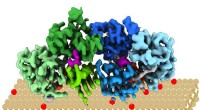
DNA, or deoxyribonucleic acid, is a complex molecule that carries the genetic instructions for the development, functioning, and reproduction of all known living organisms and many viruses. It's often called the "blueprint of life" because it contains the instructions for building and maintaining an organism.
DNA is structured as a double helix, resembling a twisted ladder. Each "rung" of the ladder is made up of a pair of nucleotides, which are composed of:
* A sugar molecule (deoxyribose)
* A phosphate group
* A nitrogenous base
There are four different nitrogenous bases in DNA:
* Adenine (A)
* Guanine (G)
* Cytosine (C)
* Thymine (T)
The bases pair up in a specific way: A always pairs with T, and G always pairs with C. This pairing is essential for the proper replication and transcription of DNA.
DNA is found in almost every cell of every living organism, including:
* Nucleus: The majority of DNA is located in the nucleus of cells, organized into chromosomes.
* Mitochondria: Mitochondria, the "powerhouses" of cells, also have their own DNA, known as mitochondrial DNA (mtDNA).
* Chloroplasts: In plant cells, chloroplasts, which are responsible for photosynthesis, also contain their own DNA.
* Genetic Information Storage: DNA stores the genetic information necessary for an organism's development, function, and reproduction.
* Replication: DNA replicates itself during cell division, ensuring that each new cell receives a complete copy of the genetic instructions.
* Transcription: DNA's genetic information is transcribed into RNA, which carries the instructions to the ribosomes for protein synthesis.
* Evolution: Mutations in DNA can introduce genetic variations that drive evolution.
DNA plays a crucial role in:
* Understanding life: Studying DNA helps scientists understand the fundamental principles of life and the evolution of species.
* Medical advancements: DNA research has led to advancements in disease diagnosis, treatment, and genetic therapies.
* Forensic science: DNA profiling is a powerful tool used in forensic investigations for identification and solving crimes.
Overall, DNA is a complex and vital molecule that underpins the very essence of life. Its study continues to reveal new insights into the intricate workings of living organisms and their evolutionary history.