1. Absorption: This is the most common way fungus-like protists eat. They secrete enzymes outside their bodies that break down organic matter into smaller molecules, which are then absorbed through their cell membranes.
2. Saprotrophy: Many fungus-like protists are saprotrophs, meaning they feed on dead organic matter. This is similar to the role fungi play in ecosystems, decomposing decaying plants and animals and releasing nutrients back into the environment.
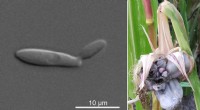
3. Parasitism: Some fungus-like protists are parasitic, meaning they live on or within a host organism and obtain nutrients from it, often causing harm to the host. Examples include the water molds that cause late blight in potatoes.
4. Predation: While less common, some fungus-like protists are predatory, trapping and consuming smaller organisms, like bacteria or other protists.
Key Features of Fungus-like Protists:
* Heterotrophic: They cannot produce their own food like plants.
* Similar to Fungi: They often have a filamentous growth pattern and reproduce by spores like fungi.
* Distinct from Fungi: They lack the chitinous cell walls found in fungi.
Examples of Fungus-like Protists:
* Water molds: They live in aquatic environments and often cause diseases in plants.
* Slime molds: They form large, visible masses in moist environments and are known for their fascinating life cycles.
* Oomycetes: These are a group of fungus-like protists that include water molds and downy mildews.
Remember, while the term "fungus-like" implies a similarity to fungi, these protists are distinct organisms with their own unique characteristics.