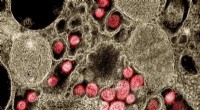
1. Metabolism: This encompasses all the chemical reactions that occur within a cell to sustain life. This includes breaking down nutrients for energy (catabolism) and building complex molecules (anabolism).
2. Growth: Cells must grow and increase in size to perform their functions properly. This involves producing more cellular components like proteins, lipids, and nucleic acids.
3. Reproduction: Cells replicate themselves through processes like mitosis and meiosis, ensuring the continuation of life.
4. Response to stimuli: Cells must be able to detect and respond to changes in their environment, whether internal or external. This allows them to adapt and survive in a constantly changing world.
While these four functions are fundamental, cells also perform many other specialized tasks depending on their type and the organism they belong to. For instance, muscle cells are specialized for contraction, nerve cells for transmitting signals, and photosynthetic cells for capturing light energy.
It's important to remember that these four core functions are interconnected and rely on each other to maintain life.