A single-celled organism that lacks a membrane-bound nucleus and other membrane-bound organelles.
Here's why this definition is the most accurate and comprehensive:
* Single-celled: Prokaryotes are always unicellular, meaning they exist as individual cells.
* Lack of membrane-bound nucleus: The genetic material (DNA) in prokaryotes is not enclosed within a separate membrane-bound nucleus, unlike eukaryotic cells. Instead, it is located in a region called the nucleoid.
* Lack of membrane-bound organelles: Prokaryotes lack other internal membrane-bound organelles like mitochondria, Golgi apparatus, endoplasmic reticulum, etc. These structures are found in eukaryotes and are responsible for various cellular functions.
Important distinctions from eukaryotes:
* Prokaryotes are generally much smaller than eukaryotic cells.
* They have a simpler internal structure with fewer specialized compartments.
* Prokaryotes reproduce asexually, mainly through binary fission.
Examples of prokaryotes:
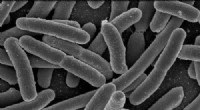
* Bacteria
* Archaea
Therefore, the definition above accurately captures the defining characteristics of prokaryotes and distinguishes them from eukaryotic cells.