1. Transmission Electron Microscopy (TEM)
* What it does: TEM uses a beam of electrons to illuminate a very thin sample. The electrons pass through the sample, and the resulting image is projected onto a screen or detector.
* Why it's important for cell function:
* High resolution: TEM provides incredibly detailed images, allowing us to see the internal structures of cells at the nanometer scale. This means we can visualize organelles like mitochondria, the endoplasmic reticulum, and even individual proteins.
* Revealing 3D structure: TEM can be used to create 3D reconstructions of cells, giving us a better understanding of how these structures interact and function together.
* Understanding cellular processes: By studying images of cells in different stages of their life cycle or under different conditions, TEM helps us understand how cellular processes like cell division, protein synthesis, and energy production occur.
2. Positron Emission Tomography (PET)
* What it does: PET uses a radioactive tracer (usually a glucose analog) that is injected into the body. The tracer is taken up by cells that are metabolically active. The positron emitted by the tracer interacts with electrons in the body, producing gamma rays that are detected by a scanner.
* Why it's important for cell function:
* Metabolic activity: PET allows us to measure the metabolic activity of different tissues and organs, including individual cells. This is useful for understanding how cells are using energy and nutrients, and how this changes under different conditions.
* Disease diagnosis and monitoring: PET is used to diagnose and monitor a wide range of diseases, including cancer, Alzheimer's disease, and heart disease. It helps identify areas of abnormal metabolic activity that can indicate disease processes.
3. Acoustic Microscopy (AM)
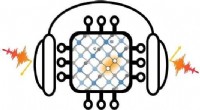
* What it does: AM uses sound waves to create images of structures within cells. These sound waves can be reflected, refracted, or absorbed by different structures within the cell, allowing us to distinguish between them.
* Why it's important for cell function:
* Non-invasive imaging: AM is a non-invasive technique, meaning that it doesn't require the use of dyes or other agents that can potentially damage cells. This makes it particularly useful for studying living cells.
* Measuring mechanical properties: AM can be used to measure the mechanical properties of cells, such as their stiffness and elasticity. This information is important for understanding how cells interact with their environment and how they respond to external stimuli.
* Cell function and disease: AM is used to study cell function in different conditions, such as the changes in mechanical properties that occur during cancer development.
Important Note: While TEM is not typically used for living cells due to the sample preparation techniques required, the other two techniques (PET and AM) are valuable for studying cell function in living organisms.