Here's a breakdown:
Early Observations:
* Robert Hooke (1665): Observed and named "cells" while examining cork under a microscope.
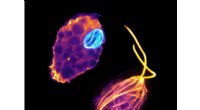
* Anton van Leeuwenhoek (1674): Used improved microscopes to observe living organisms (animalcules) in pond water, contributing to the idea of living cells.
Further Development:
* Matthias Schleiden (1838): Observed plant cells and proposed that all plants are made of cells.
* Theodor Schwann (1839): Extended the observation to animals, stating that all animals are made of cells.
* Rudolf Virchow (1855): Added the crucial part of the theory stating that all cells arise from pre-existing cells ("Omnis cellula e cellula").
The Cell Theory
These contributions were combined to form the modern Cell Theory, which states:
1. All living organisms are composed of one or more cells.
2. The cell is the basic unit of structure and function in all living organisms.
3. All cells arise from pre-existing cells.
Therefore, the cell theory is a testament to the collaborative nature of scientific discovery, built upon the observations and hypotheses of multiple scientists over time.