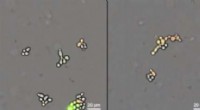
* Single-celled organisms: These are the simplest life forms, like bacteria and amoebas, and are composed of only one cell.
* Multicellular organisms: These include plants, animals, fungi, and algae, and consist of trillions of cells.
Here are some examples:
* Human: A human body is estimated to contain around 37.2 trillion cells.
* Fruit fly: A fruit fly has approximately 100,000 cells.
* Bacterium: A single bacterium is a single-celled organism.
It's important to note that the number of cells in an organism can change throughout its life cycle, depending on growth, development, and cell division.