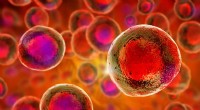
* Mitosis is a process of cell division that produces two daughter cells that are genetically identical to the parent cell. This is crucial for growth, development, and repair in multicellular organisms.
* During mitosis, the DNA in the parent cell is replicated, creating two complete sets of chromosomes. These sets are then separated into the two daughter cells, ensuring that each daughter cell receives an identical copy of the parent cell's DNA.
In summary:
* Mitosis results in two daughter cells that are genetically identical to the parent cell.
* The daughter cells have the same number of chromosomes as the parent cell.
* There are no genetic changes or mutations introduced during mitosis.
This makes mitosis distinct from meiosis, where genetic diversity is created through the exchange of genetic material and the formation of haploid gametes.