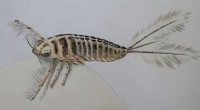
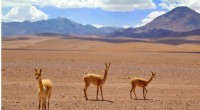
1. Oversimplification: The Linnaean system relies heavily on morphological (physical) characteristics for classification. However, this approach can be misleading because:
* Convergent evolution: Organisms from different evolutionary lineages can develop similar features due to adapting to similar environments. This leads to misclassification if only morphology is considered.
* Variations within species: Significant variations can occur within a single species, making it difficult to define clear boundaries using physical traits alone.
* Hidden diversity: The Linnaean system often overlooks subtle differences between species that may be significant from an evolutionary perspective.
2. Difficulty in accommodating new discoveries: The discovery of new species and the increasing understanding of evolutionary relationships challenge the rigid hierarchical structure of the Linnaean system. It can be difficult to integrate new information without disrupting the existing framework.
3. Lack of evolutionary perspective: The Linnaean system focuses on similarities and differences between organisms, but it does not explicitly account for their evolutionary history and relationships. This can lead to misleading interpretations about their origins and connections.
4. Limited use of molecular data: The Linnaean system was developed before the advent of molecular biology. It does not effectively utilize the wealth of information available from DNA sequences, which provide a much deeper understanding of evolutionary relationships.
5. Unclear criteria for defining species: The Linnaean system struggles to define what constitutes a species, especially in cases of hybridization or continuous variation. This ambiguity can lead to inconsistencies in classification.
To address these issues, modern biologists are turning to alternative classification systems:
* Phylogenetic classification: This system uses evolutionary relationships based on shared ancestry, often derived from molecular data, to organize organisms.
* Cladistics: A method of classification that focuses on shared derived characters (synapomorphies) to determine evolutionary relationships.
* Integrated Taxonomy: This approach combines morphological, molecular, and ecological data to provide a more comprehensive understanding of biodiversity.
While the Linnaean system remains a useful tool for basic identification and organization, the increasing complexity of our understanding of biodiversity demands more sophisticated and dynamic classification systems.