Here are some examples:
* Joints: Joints in the skeletal system act as fulcrums for the movement of bones. The joint provides a pivot point around which muscles can exert force to move the bones.
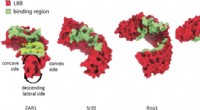
* Protein folding: In protein structure, the "hinge" regions of proteins can be thought of as fulcrums. These regions allow for flexibility and movement of the protein, which is essential for its function.
* Active sites of enzymes: The active site of an enzyme can be considered a fulcrum for the chemical reaction it catalyzes. The enzyme brings together the substrate molecules and facilitates their interaction by acting as a pivot point for the reaction.
* Cell division: In cell division, the spindle fibers can be seen as a kind of fulcrum, pulling apart the chromosomes during mitosis or meiosis.
It's important to note that these are analogies and not direct interpretations of "fulcrum" as a physical concept. In biology, the term "fulcrum" is not a technical term, and its use would require explanation and clarification to avoid confusion.