Enzymes are biological catalysts made up of proteins, and sometimes non-protein components called cofactors.
Protein Composition:
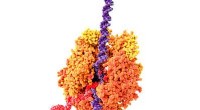
* Amino acids: Enzymes are chains of amino acids linked together by peptide bonds, forming a complex three-dimensional structure. The sequence of amino acids dictates the enzyme's specific function.
* Primary Structure: The linear sequence of amino acids.
* Secondary Structure: The local folding of the polypeptide chain into α-helices and β-sheets.
* Tertiary Structure: The overall three-dimensional shape of a single polypeptide chain.
* Quaternary Structure: The arrangement of multiple polypeptide chains (subunits) in a functional protein.
Cofactors:
* Inorganic Ions: These can be metal ions (e.g., iron, zinc, copper) that help with electron transfer or stabilize the protein's structure.
* Organic Molecules: These can be coenzymes (e.g., NAD+, FAD) that act as electron carriers or participate in chemical reactions.
Active Site:
* The key region: A specific pocket on the enzyme surface where the substrate (the molecule the enzyme acts upon) binds.
* Specificity: The active site is designed to bind to a specific substrate, allowing the enzyme to catalyze a specific reaction.
* Temperature: Enzymes have an optimal temperature for activity.
* Low temperatures: Slow down enzymatic reactions.
* High temperatures: Can denature the enzyme, disrupting its structure and rendering it inactive.
* pH: Enzymes have an optimal pH range.
* Extreme pH: Can disrupt the ionic interactions holding the enzyme's structure together, leading to denaturation.
* Substrate Concentration: Increasing substrate concentration will increase reaction rate until the active sites are saturated.
* Enzyme Concentration: Increasing enzyme concentration will increase reaction rate directly.
* Inhibitors: Molecules that bind to the enzyme and interfere with its function:
* Competitive inhibitors: Bind to the active site, competing with the substrate.
* Non-competitive inhibitors: Bind to a different site on the enzyme, changing its conformation and reducing activity.
* Activators: Molecules that bind to the enzyme and enhance its activity.
* Post-translational Modifications: Chemical modifications that occur after the protein is synthesized, such as phosphorylation or glycosylation, can alter the enzyme's structure and activity.
In Summary:
Enzymes are highly specific catalysts with intricate structures, and their activity is sensitive to factors like temperature, pH, and the presence of inhibitors or activators. Understanding these factors is crucial for comprehending how enzymes function in biological systems.