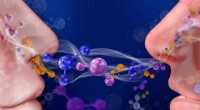
1. Formation of simple organic molecules: Early Earth's atmosphere and oceans contained inorganic molecules that, under the influence of energy sources like lightning, volcanic activity, and ultraviolet radiation, combined to form simple organic molecules like amino acids and nucleotides.
2. Self-assembly of organic molecules: These organic molecules began to self-assemble into more complex structures, like proteins and nucleic acids (DNA and RNA).
3. Formation of protocells: These complex molecules became enclosed within membranes, creating primitive cells called protocells. These structures possessed basic cellular functions like metabolism and replication.
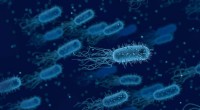
4. Evolution of prokaryotes: Over time, these protocells evolved into the first true prokaryotes. These single-celled organisms lacked a nucleus and other membrane-bound organelles.
Key points to remember:
* Abiogenesis is a complex process and there's no single "recipe" for creating life. Scientists are still working to understand the exact conditions and mechanisms involved.
* Prokaryotes are considered the oldest form of life on Earth. They predate eukaryotic cells by billions of years.
* The evolution of prokaryotes laid the foundation for the development of all other life forms.
In summary, while the exact origin of the first true prokaryotes is still a mystery, the prevailing theory suggests they arose through abiogenesis from non-living matter, evolving over time into simple single-celled organisms lacking a nucleus.