Cytokinesis is the final stage of cell division, where the cytoplasm of the parent cell divides to form two daughter cells. In animal cells, this process occurs through a unique mechanism involving a contractile ring. Here's a breakdown:
1. Cleavage Furrow Formation:
- As mitosis nears completion, a ring of microfilaments, primarily composed of actin and myosin, assembles beneath the plasma membrane in the middle of the dividing cell.
- This ring, known as the contractile ring, forms a shallow groove called the cleavage furrow.
2. Contraction and Invagination:
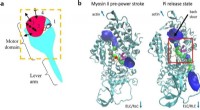
- Actin and myosin within the contractile ring interact, causing the ring to contract.
- This contraction pulls the plasma membrane inwards, deepening the cleavage furrow.
3. Cell Separation:
- As the cleavage furrow continues to constrict, it pinches inwards, eventually dividing the cytoplasm into two distinct daughter cells.
- The process is driven by the hydrolysis of ATP which provides energy for the interaction of actin and myosin.
4. Completion:
- Once the cleavage furrow reaches the center of the cell, the two daughter cells are completely separated, each with its own nucleus and cytoplasm.
Key Features of Animal Cell Cytokinesis:
- Cleavage furrow: A characteristic groove that pinches the cell in two.
- Contractile ring: A ring of actin and myosin filaments that drive the process.
- No cell wall: Unlike plant cells, animal cells lack a rigid cell wall, allowing for flexible membrane invagination.
Visualizing Cytokinesis:
Imagine a balloon being tied tightly in the middle. The string represents the contractile ring, and the balloon surface represents the cell membrane. As the string tightens, it pinches the balloon into two separate parts. This is a simplified analogy of how cytokinesis occurs in animal cells.
In Summary:
Animal cell cytokinesis is a dynamic process involving the formation and contraction of a contractile ring, ultimately leading to the physical division of the cytoplasm and the creation of two daughter cells. This process ensures the proper distribution of cellular components during cell division.