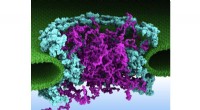
1. Plasma Membrane: This is the outer boundary of the cell, acting as a selective barrier that controls what enters and exits the cell. It's also involved in many important cellular processes like energy production.
2. Cytoplasm: This is the gel-like substance that fills the cell, containing all the cellular components (except the nucleus in eukaryotic cells). It's where most of the cell's metabolic activities occur.
3. DNA: This is the genetic material of the bacterial cell, carrying the instructions for all the cell's functions. Unlike eukaryotic cells, bacterial DNA is not contained within a nucleus but floats freely in the cytoplasm.
It's important to note that bacterial cells also have other important structures, like ribosomes (for protein synthesis), flagella (for movement), and sometimes capsules (for protection). However, the plasma membrane, cytoplasm, and DNA are the three essential components that define a bacterial cell.