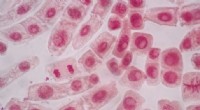
* Organelles: These are specialized structures within cells that perform specific functions. Examples include the nucleus, mitochondria, Golgi apparatus, and endoplasmic reticulum.
* Cells: The basic unit of life. They are enclosed by a membrane and contain genetic material (DNA).
* Non-cell: This term is a bit ambiguous. It could mean a few things:
* Something that is not a cell: This could be anything from a rock to a molecule. These things don't have the characteristics of a cell (membrane, DNA, etc.)
* Something outside of a cell: This could refer to the extracellular space, which is the space between cells in a multicellular organism.
So, the answer depends on what you mean by "non-cell":
* If you mean "something that is not a cell," then organelles cannot exist in a non-cell because organelles are parts of cells.
* If you mean "something outside of a cell," then organelles are not found in the non-cell environment.
To put it simply, organelles are only found inside of cells.