Here's a breakdown:
* Cell: The basic unit of life. All living organisms are made of cells.
* Multicellular: An organism composed of more than one cell. These cells work together to perform specialized functions, creating complex structures and systems.
Examples of multicellular organisms:
* Animals (like humans, dogs, and insects)
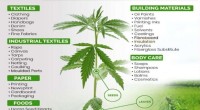
* Plants (like trees, flowers, and grasses)
* Fungi (like mushrooms and molds)
Contrast to Unicellular Organisms:
* Unicellular: An organism composed of only one cell. These organisms, like bacteria and amoeba, are much simpler and perform all life functions within a single cell.
Multicellularity is a key evolutionary advancement that allowed for the development of larger, more complex organisms with specialized functions.