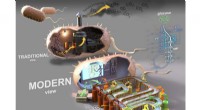
Here's how lysosomes interact with food and energy:
Food:
* Breakdown of food: When food is taken into the cell through endocytosis (a process where the cell membrane engulfs materials), it forms a vesicle called an endosome.
* Fusion with lysosomes: The endosome fuses with a lysosome. The enzymes inside the lysosome break down the food molecules into smaller components (like amino acids, sugars, and fatty acids) that the cell can use.
* Nutrient release: These breakdown products are then released back into the cytoplasm for the cell to use as fuel or for building blocks.
Energy:
* No direct energy production: Lysosomes don't directly produce energy (ATP) like mitochondria do.
* Recycling for energy: The breakdown products from lysosomal digestion can be used by other cellular processes, such as cellular respiration, to generate energy.
In short: Lysosomes break down food molecules, providing the cell with nutrients that can be used for energy production and other cellular processes.