Here's a breakdown:
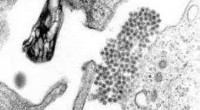
* Lysogenic Cycle: This is one of the two main ways viruses replicate. In this cycle, the virus's genetic material integrates into the host cell's DNA, becoming a prophage. The host cell then replicates normally, copying the viral DNA along with its own. This allows the virus to spread without immediately destroying the host cell.
* Lytic Cycle: In contrast, the lytic cycle results in the destruction of the host cell. The virus replicates rapidly and bursts out of the cell, releasing new virus particles.
Key Points:
* Lysogenic viruses can remain dormant for long periods, allowing the virus to persist in a population without causing immediate harm.
* The lysogenic cycle can be triggered by various factors, leading to the transition to the lytic cycle and the production of new virus particles.
* Examples of lysogenic viruses include herpesviruses (e.g., herpes simplex virus, varicella-zoster virus) and HIV.
It's important to note that some viruses can engage in both lysogenic and lytic cycles, depending on environmental conditions and host factors.