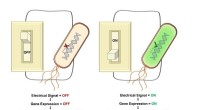
1. Transcription:
* DNA (Deoxyribonucleic acid): This is the blueprint for making proteins. It contains genes, specific sequences that code for a particular protein.
* RNA (Ribonucleic acid): This acts as a messenger molecule.
* Transcription: In the nucleus of a cell, a specific gene is copied from DNA into a messenger RNA (mRNA) molecule.
2. Translation:
* mRNA: The mRNA molecule travels out of the nucleus to the cytoplasm, where protein synthesis occurs.
* Ribosomes: These are cellular structures that read the mRNA code.
* tRNA (Transfer RNA): These molecules bring specific amino acids to the ribosome, following the instructions in the mRNA.
* Translation: Ribosomes "read" the mRNA code, and tRNA molecules deliver the corresponding amino acids.
* Polypeptide chain: Amino acids are linked together one by one, forming a long chain called a polypeptide.
3. Folding and Modification:
* Folding: The polypeptide chain spontaneously folds into a specific three-dimensional shape (conformation). This shape is crucial for the protein's function.
* Modifications: Proteins can undergo further modifications, such as adding sugars or lipids, which affect their structure and function.
Key Points:
* The sequence of amino acids in a protein determines its shape.
* The shape of a protein determines its function.
* There are many different proteins, each with a specific role in the body.
* Errors in protein synthesis can lead to various diseases.
In short, protein synthesis is a complex process involving DNA, RNA, ribosomes, and tRNA, all working together to create functional proteins.