Here's why:
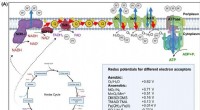
* Oxidative phosphorylation is the final stage of cellular respiration, where electrons from glucose are passed down an electron transport chain, creating a proton gradient across the mitochondrial membrane. This gradient is then used by ATP synthase to generate ATP.
* Mitochondria are the powerhouses of the cell, containing the necessary enzymes and structures for oxidative phosphorylation.
While glycolysis (the breakdown of glucose in the cytoplasm) produces a small amount of ATP through substrate-level phosphorylation, the majority of ATP is generated through oxidative phosphorylation in the mitochondria.