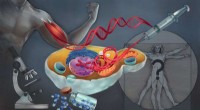
Imagine a bustling factory, filled with different machines each performing a specific job to create the final product. Now imagine that factory shrunk down to the size of a single cell! That's what cell organelles are like - the tiny, specialized structures within a cell that carry out various functions, just like machines in a factory.
Here's a breakdown of some key cell organelles and their roles:
1. Nucleus:
* The control center: Contains the cell's DNA, which holds the genetic instructions for building and maintaining the cell.
* Like a factory manager: Directs the production of proteins and other essential molecules.
2. Ribosomes:
* The protein builders: Sites where proteins are assembled based on instructions from DNA.
* Like assembly lines: Take raw materials (amino acids) and create the finished product (proteins).
3. Endoplasmic Reticulum (ER):
* The manufacturing and transport system: A network of interconnected membranes that produce, process, and transport proteins and lipids.
* Like a conveyor belt: Moves materials around the cell and modifies them along the way.
* Two types:
* Rough ER: Studded with ribosomes, involved in protein synthesis.
* Smooth ER: Lacks ribosomes, involved in lipid synthesis and detoxification.
4. Golgi Apparatus:
* The packaging and shipping center: Modifies, sorts, and packages proteins and lipids for secretion or delivery to other parts of the cell.
* Like a postal service: Sorts and sends out packages containing proteins and lipids to their final destinations.
5. Mitochondria:
* The powerhouses: Convert food into energy (ATP) for the cell to use.
* Like a power plant: Generate energy that fuels all cellular activities.
6. Lysosomes:
* The recycling and waste disposal system: Break down waste materials, worn-out organelles, and foreign invaders (bacteria, viruses).
* Like a recycling plant: Dismantle and reuse cellular components.
7. Vacuoles:
* The storage tanks: Store water, nutrients, and waste products.
* Like storage containers: Provide a place to hold and regulate important substances.
8. Cytoskeleton:
* The cell's internal framework: A network of protein fibers that provides shape, support, and allows for movement.
* Like a scaffolding: Gives the cell structure and allows for changes in shape and movement.
9. Cell Membrane:
* The gatekeeper: Controls what enters and exits the cell.
* Like a security guard: Protects the cell and regulates what goes in and out.
10. Chloroplasts (in plant cells):
* The solar power plants: Capture light energy from the sun and convert it into chemical energy (sugars) through photosynthesis.
* Like solar panels: Convert sunlight into energy for the plant cell.
Other notable organelles:
* Centrioles: Help organize microtubules during cell division.
* Peroxisomes: Break down fatty acids and detoxify harmful substances.
These are just some of the many organelles that work together to keep a cell alive and functioning. Understanding these tiny workers helps us appreciate the complex and intricate world within every living cell.