The theory of evolution is a foundational concept in biology, yet it continues to be a subject of debate and controversy. Here are some arguments for and against evolution, categorized by their focus:
Arguments for Evolution:
* Fossil Evidence: The fossil record shows a clear progression of life forms over time, with earlier fossils being simpler and later fossils becoming more complex. This supports the idea of gradual change and descent with modification.
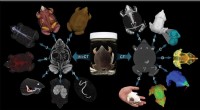
* Anatomical Similarities: Many organisms share similar anatomical structures, suggesting common ancestry. For example, the forelimbs of humans, whales, bats, and birds are all variations of the same basic bone structure.
* Molecular Biology: Genetic similarities between different species provide strong evidence for common ancestry. DNA sequences and protein structures are remarkably similar across diverse organisms, indicating a shared evolutionary history.
* Biogeography: The distribution of species on Earth reflects their evolutionary history. For example, the unique flora and fauna of isolated islands can be explained by their isolation and independent evolution.
* Direct Observation: We can observe evolution happening in real-time, such as the development of antibiotic resistance in bacteria or the evolution of new species in laboratory settings.
* Natural Selection: The mechanism of natural selection provides a powerful explanation for how evolution occurs. Organisms with traits that make them better adapted to their environment are more likely to survive and reproduce, passing on those advantageous traits to their offspring.
Arguments Against Evolution:
* Irreducible Complexity: Some critics argue that certain biological structures, like the eye or flagellum, are too complex to have evolved gradually and must have been designed. However, scientists have shown that these structures can evolve through a series of smaller, incremental changes.
* Lack of Transitional Fossils: While the fossil record is extensive, there are gaps in our knowledge, especially for some transitions between major groups of organisms. However, new discoveries are constantly filling in these gaps, and the gaps themselves do not disprove evolution.
* The Second Law of Thermodynamics: Critics argue that evolution violates the second law of thermodynamics, which states that entropy (disorder) always increases in a closed system. However, Earth is not a closed system, and the sun provides energy that drives the processes of life.
* The Cambrian Explosion: The sudden appearance of a wide diversity of animal life forms during the Cambrian Period is sometimes cited as evidence against gradual evolution. However, this period likely represents a rapid diversification of life after a long period of slow evolution.
* Chance and Randomness: Some critics argue that evolution relies too much on chance and random mutations. However, mutations are not entirely random; they are influenced by environmental factors and the existing genetic code. Natural selection then acts on those mutations, favoring beneficial ones.
It's important to note:
* The vast majority of scientists accept evolution as a valid explanation for the diversity of life on Earth.
* Many of the arguments against evolution rely on misunderstandings of scientific principles or misinterpretations of the evidence.
* Scientific evidence continues to accumulate, strengthening the case for evolution and addressing the concerns raised by critics.
Ultimately, the debate about evolution is not about whether it happened, but rather about the details of the process and the role of different factors in driving it.