Here's a breakdown of the key steps:
1. Observation: This is where it all starts. Biologists observe the world around them, noticing patterns, behaviors, and phenomena in living organisms.
2. Question: Based on their observations, they formulate a question that they want to investigate. This question should be specific and focused.
3. Hypothesis: They propose a testable explanation for the observed phenomenon. This is a prediction about the answer to their question.
4. Prediction: Based on the hypothesis, they make specific predictions about what they expect to observe if their hypothesis is correct.
5. Experiment: They design and conduct a controlled experiment to test their hypothesis and predictions. This involves manipulating variables and carefully measuring the results.
6. Analysis: They analyze the data collected from the experiment and determine whether the results support their hypothesis.
7. Conclusion: Based on the analysis, they draw a conclusion about their hypothesis. If the hypothesis is supported, they can refine their understanding of the phenomenon. If not, they may need to revise their hypothesis or develop a new one.
Why is the Scientific Method important in biology?
* Objectivity: It helps minimize bias and ensure that conclusions are based on evidence rather than subjective opinions.
* Reproducibility: Experiments are designed to be repeatable, allowing other scientists to verify the findings.
* Progress: It provides a framework for building upon existing knowledge and making new discoveries.
* Solving problems: It helps us understand and solve biological problems, such as finding cures for diseases or developing sustainable agriculture practices.
Examples of the Scientific Method in action:
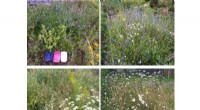
* Investigating the effect of a new fertilizer on plant growth:
* Observation: Plants grown with different fertilizers show varying growth rates.
* Question: Does this new fertilizer improve plant growth compared to existing ones?
* Hypothesis: The new fertilizer will promote faster growth.
* Experiment: Growing plants in controlled conditions with different fertilizers and measuring growth over time.
* Analysis: Comparing the growth data between groups.
* Conclusion: Based on the data, they can determine whether the new fertilizer is effective.
* Studying the spread of a disease:
* Observation: An outbreak of a disease in a population.
* Question: How does this disease spread and what factors contribute to its transmission?
* Hypothesis: The disease is transmitted through contact with infected individuals.
* Experiment: Tracking the spread of the disease within a controlled population and testing different interventions to prevent transmission.
* Analysis: Studying the patterns of infection and how they are influenced by various factors.
* Conclusion: This information can help develop strategies for controlling the disease.
The scientific method is a continuous cycle of observation, experimentation, and refinement. It's a powerful tool that drives biological research and helps us understand the complexities of life on Earth.