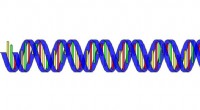
* DNA probes work by hybridization: They bind to complementary sequences in a target DNA molecule.
* Specificity comes from base pairing: The four nucleotide bases (adenine, thymine, guanine, cytosine) pair specifically (A with T, G with C).
* Unique sequences: Each DNA probe is designed to have a sequence that matches a unique region of the target DNA.
Think of it like a lock and key:
* The DNA probe is the key, and the target DNA is the lock.
* The specific sequence of the probe is the key's shape, and only a matching sequence on the target DNA will allow it to bind.
Other factors can influence the strength of binding, but the primary determinant of specificity is the probe's sequence.