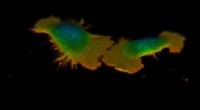
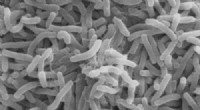
1. All living organisms are composed of one or more cells. This means that every living thing, from the smallest bacteria to the largest whale, is made up of cells.
2. The cell is the basic unit of life. This means that cells are the smallest units that can carry out all the functions necessary for life.
3. All cells arise from pre-existing cells. This means that new cells are not spontaneously generated, but rather are formed from the division of existing cells.
Key points to remember about the cell theory:
* It's a unifying principle in biology that helps us understand how living organisms are organized and how they function.
* It is a product of many scientists' work and discoveries over time, with Robert Hooke, Antonie van Leeuwenhoek, Matthias Schleiden, Theodor Schwann, and Rudolf Virchow being some of the key figures.
* The cell theory is constantly being refined and updated as new discoveries are made.
The cell theory is not just an abstract concept. It has many practical applications, including:
* Understanding disease: Many diseases are caused by problems at the cellular level.
* Developing new treatments: Scientists are developing new treatments for diseases by targeting specific cells or processes.
* Developing new technologies: Cell-based technologies, such as stem cell therapy, are being used to treat a variety of conditions.