Here's a breakdown:
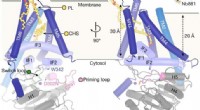
* Plasma membrane: This is the outer boundary of the cell, and it's the primary site for active transport. The membrane contains embedded proteins that act as pumps and carriers, using energy to move molecules against their concentration gradient.
* Organelles: Many organelles, such as the endoplasmic reticulum (ER) and Golgi apparatus, also utilize active transport. The ER plays a vital role in protein synthesis and folding, while the Golgi apparatus modifies and packages proteins for export or delivery to other parts of the cell. Active transport within these organelles helps regulate the flow of molecules and maintain their specific functions.
* Mitochondria: These are the powerhouse of the cell, responsible for generating ATP, the energy currency of the cell. Active transport within mitochondria is crucial for moving molecules necessary for cellular respiration, such as protons, across the mitochondrial membrane.
It's important to remember that active transport is not limited to a single location within the cell. The specific location depends on the molecules being transported and the cell's overall function.