The tree of life represents the evolutionary relationships between all living organisms. It's a visual depiction of how all life on Earth has diverged from a single common ancestor over billions of years. Here's how evolution shapes this tree:
1. Common Ancestry: All life on Earth shares a single common ancestor. This ancestor was a simple, single-celled organism that lived billions of years ago.
2. Mutations and Variation: Over time, these organisms began to accumulate small changes in their genetic code (mutations). These mutations are random and can be beneficial, harmful, or neutral.
3. Natural Selection: In environments with limited resources and competition, organisms with beneficial mutations are more likely to survive and reproduce. They pass these beneficial traits to their offspring, leading to a gradual shift in the population's genetic makeup.
4. Speciation: Over long periods, these gradual changes can lead to the formation of new species. When a population becomes isolated or experiences significant environmental changes, its genetic makeup diverges enough that it can no longer interbreed with its ancestors.
5. Branching Pattern: The process of speciation creates the branching pattern of the tree of life. Each branch represents a lineage of organisms that has evolved independently from others.
6. Shared Ancestry: The closer two branches are on the tree, the more recent their common ancestor. This means they share a greater proportion of their genetic makeup.
7. Continuous Evolution: The tree of life is not static. Evolution continues to happen, with new species forming and existing lineages diversifying. This means the tree is constantly being updated with new information.
How we understand the tree of life:
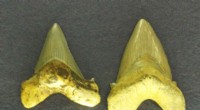
* Fossil Records: Fossils provide evidence of extinct organisms and how life forms have changed over time.
* Comparative Anatomy: Similarities and differences in the anatomy of different organisms can indicate their evolutionary relationships.
* Molecular Data: Comparing the genetic sequences of different organisms can provide a highly accurate and detailed picture of their evolutionary history.
In summary, evolution is the engine that drives the formation of the tree of life. Mutations, natural selection, and speciation lead to the branching pattern of the tree, revealing the relationships between all living organisms and their shared common ancestor. It's a powerful reminder of the interconnectedness of life and the incredible journey of evolution.