* Evolution is the change in the genetic makeup of a population over time. This change can be driven by various factors, such as:
* Natural selection: Individuals with traits better suited to their environment are more likely to survive and reproduce, passing those advantageous traits to their offspring.
* Genetic drift: Random changes in the frequency of genes within a population, especially significant in small populations.
* Gene flow: The movement of genes between populations, which can introduce new genetic variations.
* Speciation occurs when populations diverge genetically enough that they can no longer interbreed and produce fertile offspring. This divergence is the result of the evolutionary processes mentioned above, acting over long periods.
In essence, speciation is the outcome of evolution. Evolution leads to changes within populations, and when those changes are significant enough to prevent interbreeding, a new species emerges.
Here are some examples of how speciation occurs:
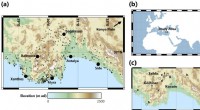
* Geographic isolation: A population is separated by a physical barrier (like a mountain range or a river), leading to independent evolution and eventually the formation of two distinct species.
* Reproductive isolation: Even without physical separation, populations can evolve different mating behaviors, timing, or physical traits that prevent them from interbreeding, leading to speciation.
So, the formation of new species is a direct result of the evolutionary processes that lead to genetic divergence within populations.