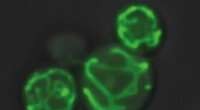
Mycolic acids are long-chain fatty acids that give Mycobacterium species their characteristic acid-fast staining property. This means they resist decolorization by acids, which is a key feature used for their identification in laboratory settings.
Here are some examples of Mycobacterium species:
* Mycobacterium tuberculosis: Causes tuberculosis
* Mycobacterium leprae: Causes leprosy
* Mycobacterium avium complex (MAC): Can cause opportunistic infections in people with weakened immune systems.
The presence of mycolic acid in the cell walls of Mycobacterium is important for several reasons:
* Protection from host defenses: The waxy layer provides a barrier against phagocytosis by immune cells, making them harder to kill.
* Resistance to antibiotics: The cell wall structure makes them resistant to many common antibiotics.
* Slow growth: The presence of mycolic acid contributes to the slow growth rate of Mycobacterium species.
Therefore, understanding the unique features of Mycobacterium's cell wall is crucial for diagnosis and treatment of diseases caused by these bacteria.