* Essential for life: It's how organisms pass on their genetic information to their offspring.
* Highly conserved: The basic mechanisms of DNA replication are very similar across all living things, from bacteria to humans.
* Evolved over billions of years: The process likely arose as early life forms evolved and needed to replicate their genetic material.
So, instead of asking where it "comes from," it's more helpful to think about:
* How did DNA replication evolve?
* Early life forms likely had simpler systems for replicating their genetic material.
* Over time, these systems became more complex and efficient, leading to the sophisticated process we see today.
* What are the key components of DNA replication?
* This includes the enzymes that unwind, copy, and proofread the DNA, as well as the building blocks (nucleotides) that are used to create the new DNA strands.
* What are the different stages of DNA replication?
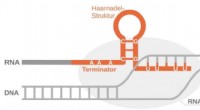
* There are multiple stages involved, including initiation, elongation, and termination.
It's important to remember that DNA replication is a complex and intricate process that is still being studied and explored by scientists. We are still uncovering the nuances of this vital biological process.