1. Similarities in Early Development:
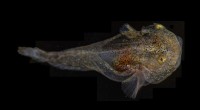
* Shared Features: Embryos of different species, even those seemingly very different as adults, often exhibit striking similarities in their early stages of development. For example, all vertebrate embryos have gill slits, a tail, and a notochord at some point, suggesting a shared ancestor.
* Von Baer's Law: This law states that the embryos of related species resemble each other more closely in their early stages than in their later stages. This pattern is consistent with the idea of a common ancestor and the gradual divergence of lineages.
* Developmental Homologies: Structures that develop from the same embryonic tissues, even if they have different functions in the adult, are called developmental homologies. This further points to shared ancestry and the modification of development over time.
2. Evolutionary Changes in Development:
* Heterochrony: This refers to changes in the timing of developmental events. For example, neoteny, the retention of juvenile features in adulthood, can be seen as a shift in developmental timing. This can lead to evolutionary change by altering the final form of an organism.
* Allometry: This refers to changes in the relative growth rates of different body parts. For example, the long necks of giraffes can be explained by allometric changes in the growth of the cervical vertebrae.
* Homeotic Genes: These genes play a crucial role in determining the body plan of an organism. Mutations in homeotic genes can lead to significant changes in development, and these changes can be passed on through evolution.
3. The Role of Development in Evolution:
* Evolutionary Novelty: New features can evolve through changes in developmental processes. For example, the evolution of feathers in birds is thought to have originated from changes in the development of scales in reptilian ancestors.
* Evolutionary Constraints: Developmental processes can also constrain evolution. For example, the development of the human hand may limit the range of possible evolutionary changes in its structure.
In conclusion, embryological studies provide valuable insights into evolutionary relationships, the mechanisms of developmental change, and the constraints on evolutionary processes. By studying embryos, we can better understand the history of life on Earth and the processes that have shaped the diversity of organisms we see today.